Who Really Benefits From Sweatshops?
by David L. Wilson
Consumers are ultimately the ones responsible for dangerous conditions in garment assembly plants in the Global South, Hong Kong-based business executive Bruce Rockowitz told the New York Times recently. The problem is that improved safety would raise the price of clothing, according to Rockowitz, who heads Li & Fung Limited, a sourcing company that hooks up retailers like Macy's and Kohl's with suppliers in low-wage countries like Bangladesh. "So far," he said, "consumers have just not been willing to accept higher costs."
Rockowitz isn't alone in blaming consumers in Europe and the United States for sweatshop conditions in the apparel industry. The idea pervades popular culture. When 1,129 Bangladeshi sweatshop workers died in the Rana Plaza collapse in April, a lawyer in the United Kingdom proposed raising money for the victims by having consumers pay a voluntary "T-shirt tax" on clothing stitched in Bangladesh. "This isn't just the fault of companies who supply cheap clothes," barrister Victoria Butler-Cole explained.
But people rarely ask whether the facts support this idea. How much money do we really save because of cheap labor in the Global South?
Calculating the "T-Shirt Tax"
The quick answer is: nickels and dimes. Although estimates of the percentage of labor costs in clothing's retail price "vary by product and location of production," World Bank senior economist Zahid Hussainwrote in 2010, "it is clear from published academic research that labor costs typically constitute 1-3 percent for a garment produced in the developing world. Hence, large increases in labor costs do not require correspondingly large increases in retail price." The Worker Rights Consortium, a group monitoring sweatshop conditions, came to a similar conclusion in 2005.
Significant wage increases and improvements in conditions at Bangladeshi apparel plants would probably add 40 or 50 cents to the price of a $10 T-shirt, at most. And this is assuming, as Bruce Rockowitz does, that manufacturers and retailers would pass the extra cost on to us.
The assumption might have been valid in the time of Adam Smith. In the eighteenth century there were many small capitalists competing with each other; any savings they made in production, either by cutting wages or adopting new technologies, they would use to reduce prices and undersell their competitors. But as leftist economists Paul Baran and Paul Sweezy showed almost 50 years ago in their book Monopoly Capital, pricing methods are very different now. By the beginning of the twentieth century the most successful companies had succeeded in swallowing up the others, and it didn't make sense for the remaining giant corporations to engage in protracted price wars among themselves. Instead, they started holding prices steady while increasing sales through other means, with an emphasis on marketing.
Companies occasionally revert to the practice of underselling their rivals, and they often take advantage of new technologies to cut prices and generate an increase in sales, as has happened with personal computers since the early 1980s. But there's no automatic connection between lower labor costs and lower prices. The price of a commodity is set by a complicated formula with many different factors, and labor costs are often a minor one.
This is especially true in an industry like apparel, where changing fashions and brand name prestige have a disproportionate effect on pricing; the difference between a $120 pair of Nike sneakers and the $30 shoes at a discount store doesn't come from high wages for workers at Nike's Indonesian suppliers.
Choosing Between Profits and Workers
To get a sense of the relative importance of labor costs, we just need to look at advertising. It's not easy to find exact information on advertising costs, but the staff of the magazine Ad Age made an effort in 2007. They estimated that spending on advertising was equal to 5.1 percent of total sales in the apparel industry, while for apparel stores the number was 4.5 percent. In other words, the cost for advertising the clothes can be as much as five times the cost of stitching them.
Other forms of marketing, such as telemarketing, email marketing, and junk mail, may account for an even larger share of an item's cost. In 2009 writers for Monthly Review calculated that advertising might represent as little as 30 percent of the total cost of marketing.
Suppose we were to cut marketing down to the minimum that consumers really find useful -- information on product availability and prices, for example. The savings would certainly be enough to allow for doubling the wages of many assembly workers and creating safe conditions in their factories, all at no extra cost to consumers.
If we had a say in the matter, it's not likely that we'd choose to let workers die in Bangladesh so that we can have our lives cluttered with ads, junk mail, and celebrity endorsements. After all, the workers, mostly young women and teenage girls, actually stitch our clothes, while the main purpose of advertising is just to get us to buy more products from one company than from another, or to create an artificial demand so that we'll buy more than we need.
But the sweatshop system isn't about what consumers want, and it's certainly not about what the workers want; the goal is to increase profits for manufacturers and retailers, to make the superrich even richer.
While blaming consumers for sweatshop conditions, Li & Fung CEO Bruce Rockowitz has done quite well from the business of sourcing sweatshops for multinationals. His company had some $20 billion in revenues in 2012, and owners Victor and William Fung are each worth about $3 billion. Businessweek estimates that Rockowitz's personal compensation last year was $6.955 million, and his net assets have been put at $33 million or more. In October 2011 Rockowitz married Hong Kong pop star Coco Lee in a ceremony that reportedly cost $20 million.
David L. Wilson is co-author, with Jane Guskin, of The Politics of Immigration: Questions and Answers, Monthly Review Press, July 2007. He also co-edits Weekly News Update on the Americas, a summary of news from Latin America and the Caribbean.
原文網址:http://mrzine.monthlyreview.org/2013/wilson120913.html
原文網址:http://www.coolloud.org.tw/node/75697
2013/09/24
公共論壇
蕭函青
輔仁大學心理學系碩士班學生、高科技冷血青年成員
責任主編:王顥中
大埔張家悲劇帶來的哀痛和怒火仍激盪在我們心中,同一時間,國內搖滾天團五月天的〈入陣曲〉新MV[1]在社運圈引起了不小的議論。許多人認為,他們用隱晦的歌詞搭配社運抗爭的新聞,包裝反抗意識,在主流樂團中已值得肯定。
事實上,這已經不是五月天第一次為社會正義發聲了,今年(2013)年初,反核聲浪四起之際,五月天的團員也在各種場合表達反核立場,一瞬間,他們從陪伴我們青春的熱血勵志樂團,昇華成社會正義發聲的良心。
原文網址:http://www.coolloud.org.tw/node/75108
2013/07/28 苦勞報導 孫窮理 苦勞網記者
責任主編:陳韋綸
以罐裝「伯朗咖啡」及咖啡店聞名的金車企業,傳出旗下「金車物流」司機工時過長,導致疲勞駕駛,以及管理階層利用調度車趟權力打壓工會的消息。今天(7/28)金車物流公會與青年勞動九五聯盟等聲援團體,前往伯朗咖啡館台科大店抗議,並將紅色染料塗抹在玻璃窗上,以「血汗咖啡」諷刺在台灣企業形象良好的金車產品,並要求據聞在同一棟大樓內的管理階層出面對話;不過經過約1個小時,資方並未出面,工會則揚言發起下一波行動。
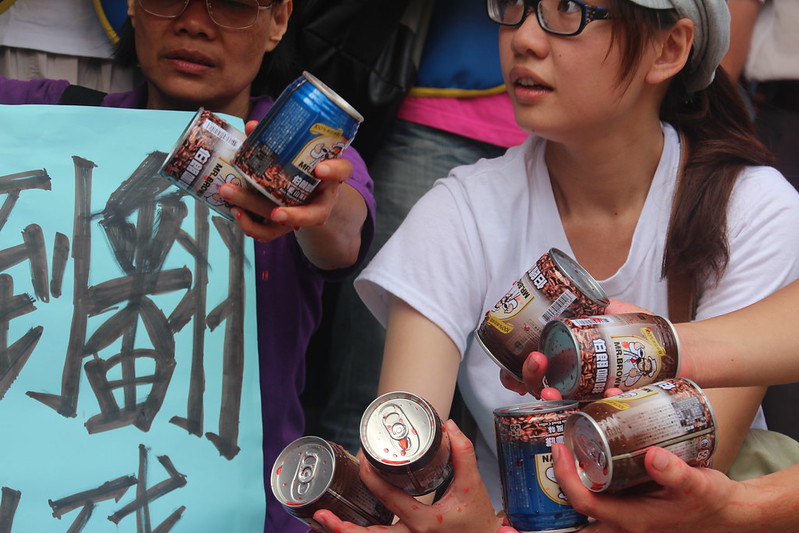 工會與聲援者以塑膠桶把「伯朗咖啡」浸泡在紅色顏料裡,指控金車物流剝削司機,賣的是「血咖啡」。(攝影:孫窮理)
 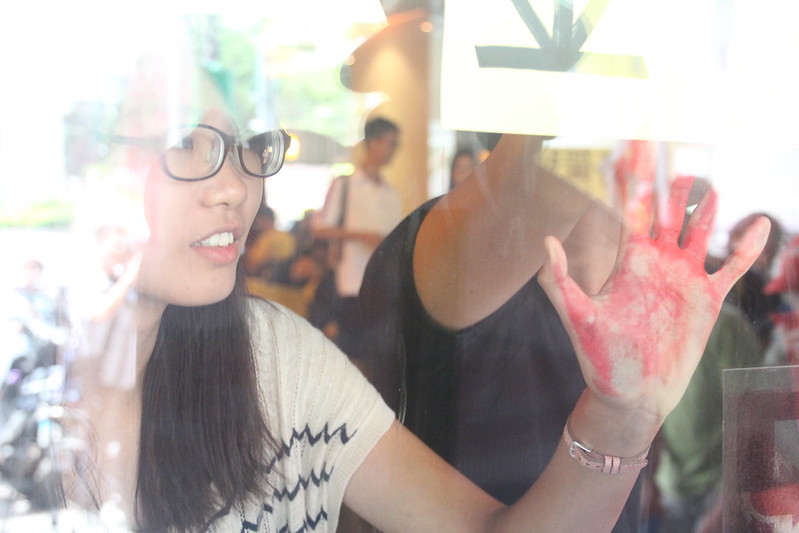 事先進入店內的抗議者把雙手塗紅,在窗戶上印出「血手印」。(攝影:孫窮理)
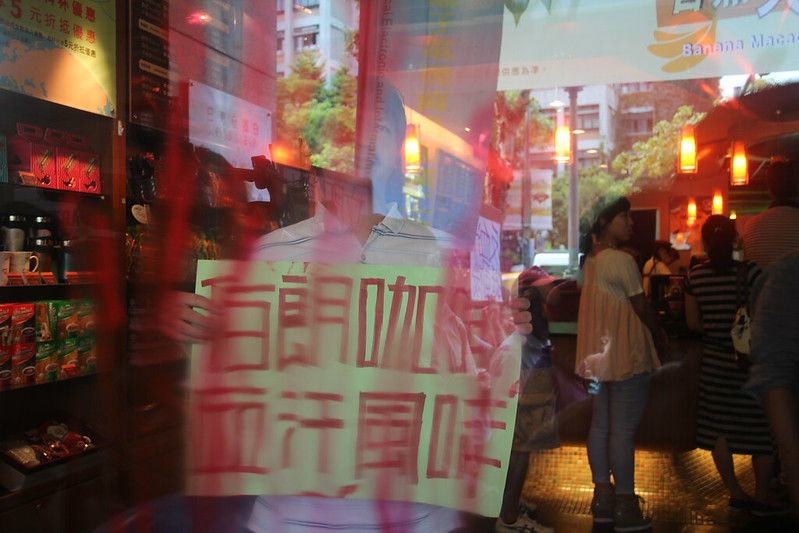 「伯朗咖啡,血汗風味」。(攝影:孫窮理)
 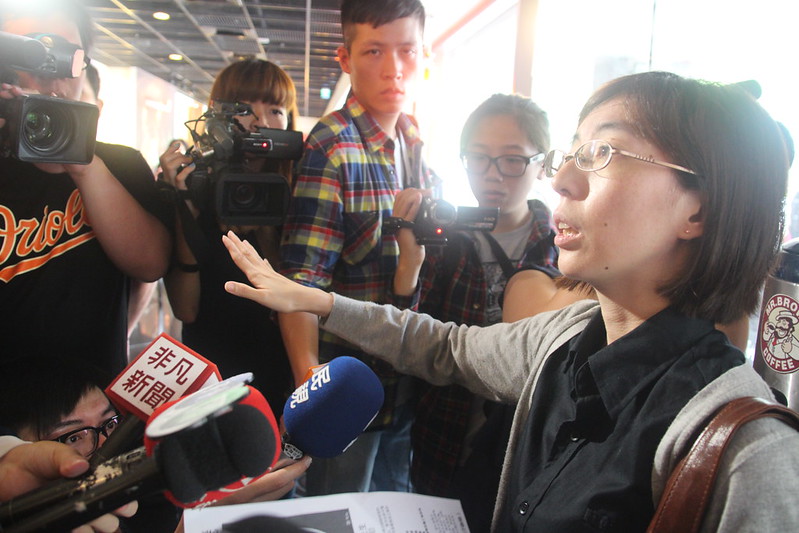 資方高層完全不出面回應,伯朗咖啡北科大店的幹部完全不知道發生什麼事,被媒體追到角落,無法回應。(攝影:孫窮理)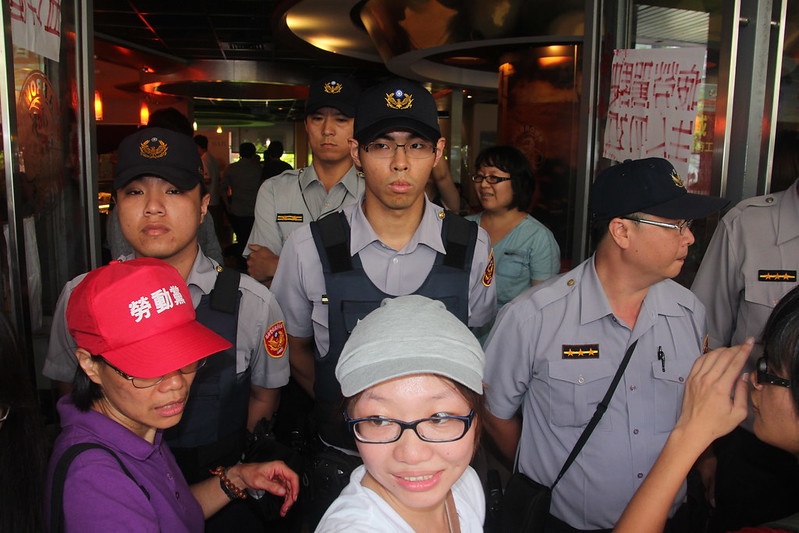
為阻止抗議者進入店內,警方一度舉牌警告,並組成人牆堵住店門口,使咖啡館無法進出。(攝影:孫窮理)
因為「椎間盤凸起」,身上仍帶著治療用護具、金車物流工會監事柯恢悟才剛開過刀,目前因職業病留職停薪,為了今天的抗爭,特別吃了加重份量的止痛藥才能久站。「椎間盤凸起」是司機駕駛長期工作後,經常發生的職業病;柯恢悟表示,長期以來,金車物流司機每日工時長達12小時、甚至長達16、17個小時,甚至發生24小時都在工作的狀態。工時過長的現象經過檢舉,桃園縣勞動及人力資源局也對金車開罰,不過公司高層親口對工會說「金車有的是錢,不怕它罰」;而在職災的責任上,柯恢悟表示自己的職業病已經經過鑑定確認,但是資方至今不願意負起職災責任,只同意先給予半年「留職停薪」。
金車物流運送的主要物品是包括伯朗咖啡、波爾茶這些商品,目前公司旗下有30多部連結車;5、6年前司機組織工會,按《工會法》30人才能組織工會的規定,當時差不多所有司機都加入工會。柯恢悟說,現在這個主管,去年(2012)5月上任後,要求司機不可加入工會,參加工會的人,就會排給他「比較累、比較不容易賺的車趟」。
公司計薪方式,與一般客貨運業類似,底薪只有1萬2千塊,之後用「獎金」之類的名目往上面加;而「車趟獎金」是以車趟計,換句話說,花較長時間才能完成的車趟,司機一天能跑的車趟減少,「車趟獎金」也就跟著減少;在這樣的操作下,參與工會的成員每月收入比起配合主管要求的人,少了2、3萬左右;在這種情形下,參與工會的人越來越少,現在只剩下幾個幹部。
工會提出「合理分配車趟」、「停止打壓工會」、「防止過勞駕駛」等訴求。目前工會成員認為,打壓動作主要是出自「主管的意志」,金車集團的董事長李添財只是「授權幹部」,讓他這樣做;不過經過今天抗議行動,公司方面並沒有任何人出面,也沒有任何回應。工會與聲援團體表示,金車若不正面回應,或者繼續打壓工會,將發起下一波行動。
原文網址:http://orientaldaily.on.cc/cnt/china_world/20121007/00178_002.html
請假被炒 莞配件廠員工跳樓亡
【本報綜合報道】美國蘋果公司的iPhone 5面世後廣受歡迎,廣東東莞一家生產iPhone 5配件的代工廠,有工人上月因請假問題與主管爭論後,一怒之下跳樓自殺死亡。廿多名死者家屬前日封堵廠房門口及拉橫額抗議,要求廠方賠償八十萬元人民幣。警方到場後一度與家屬發生衝突。
工商時報【記者吳筱雯、涂志豪╱台北報導】
宏達電傳出鼓勵員工離職方式進行人力精簡,宏達電對此嚴正否認。不過,銷售欠佳也導致宏達電北亞區銷售團隊高層人事出現異動,台灣區總經理朱啟光以北亞區總經理董俊良特助身分申請留職停薪、港澳區總經理則改由前索尼愛利信大中華區總裁盧健生接任。
壹週刊報導,宏達電將在10月底展開人力精簡計劃,以「可領資遣費、可申請失業補助」等誘因,鼓勵工作重疊性高的員工主動離職,更傳出宏達電擬定汰弱留強策略,人資內部有兩份特定名單,即加薪升職留人名單、首要勸退名單。
宏達電發言系統則對此嚴正否認,並指出報導內容多與事實不符。
宏達電近來在台灣、香港等亞太區主力市場表現欠佳,即使宏達電有One X旗艦機型加持、又有台灣的主場優勢,不過在風波不斷下,宏達電在台灣的智慧型手機一哥寶座從6月起就拱手讓給三星,香港市場表現亦不好,或許是宏達電在台灣、香港市場銷售團隊高層人事做調整的原因。
據了解,原擔任宏達電台灣區總經理的朱光啟,日前悄悄轉任北亞區總經理董俊良的特助,更從8月1日起留職停薪,台灣區總經理一職由董俊良兼任。
宏達電香港分公司亦宣布換將,港澳區總經理由曾任索尼愛立信大中華區總裁、今年6月才出任凱悅資本合夥人的盧健生,取代原本的鍾志賢,鍾志賢則轉任港澳區銷售總監。
台塑集團旗下DRAM廠南亞科技傳出將在年底前進行人力縮編,並將進行裁員,但南科表示,的確已著手進行組織重整、人力重新分配,將會進行人力優化但短期內並無裁員,屆時多出的人力會優先安置到台塑集團其它關係企業,最後非不得已,才會有裁員動作,最多不會超過1成。
原文網址:
http://www.appledaily.com.tw/appledaily/article/headline/20120814/34438312/
hTC反映的全球困境(徐挺耀)2012年08月14日
因為經濟部長替hTC請命,希望國人多買hTC手機,評論hTC何以至此也變成新聞界全民運動。事實上不只hTC,其他台灣終端廠商ASUS和acer也是正在艱苦的奮鬥。
其實這些困境是全球性的,RIM黑莓機是一家加拿大廠商,它的衰退狀況比hTC還要慘,同時市佔下跌還有一大票難兄難弟如NOKIA之類過去的霸主,更何況其中LG也是韓國大廠,除了這些大廠過去表現都很優秀現在卻很慘之外,實在看不出這些廠商的國籍有何影響。
會造成這一切主因科技業的大規模典範轉移已發生。我們可把它看成兩個階段,2006年之後的web2.0大潮帶來的第一階段典範轉移,這階段的革命者就是YouTube、facebook等新型態網路廠商,這階段的典範轉移多數的電子業廠商都是受益者,2006年全年PC出貨量是2.3億台左右,2011年已經到了1年3.5億台多。acer和ASUS在這階段也成長驚人。
買國貨救不了廠商
但蘋果iPhone帶來的移動互連網革命卻很快帶來第二階段的典範轉移,這個革命似乎是提早發生的,如果手機還是控制在NOKIA之類的廠商手中,似乎不會這麼快速,也不會這麼異質。這波革命的受益者是軟體開發商,釋放了巨大的生產力,讓全體消費者都受益,我們可以用LINE之類軟體打免費簡訊,用手機玩憤怒鳥,一邊開車一邊用iPad上的地圖導航。如果在舊的體制內,芬蘭的阿宅兄弟根本不可能在很短時間讓憤怒鳥彈向世界各地。這波第二階段的典範轉移的受害者就是前述電子廠商以及其體系,因為這波革命產生的價值多流向蘋果的體系。影響之巨大連電信商都可以說躺著也中槍,它們的語音服務跟各種賺錢的加值服務快速的被取代,更不用說那些買了iPad就不買小筆電的消費者對產業的衝擊。整個產業鏈現在還在調整面對新的環境。
在這種情形下,無論hTC或acer的領導人多有作為,都面臨一個很難改變的環境,就是蘋果這邊的所有產品都注定跟其他的電子終端廠商無關,但蘋果在終端上幾乎有全產業鏈布局,把最貴最值錢的市場分額分掉,手機上的Android陣營(以及PC上的微軟陣營)又得讓剩下的電子廠商來分,這還包含許多更適應新環境的闖入者,市場變成一個擠得不像話的紅海。而且更糟糕的是這波移動互連網的典範轉移才剛剛開頭,全世界所有大廠也都在摸著石頭過河,我們除了能確定蘋果還有一大段時間的好年冬,其他大廠明年會怎樣,也沒人猜得到。
所以對hTC等廠商現在困境的討論只是對答案的解釋,即使它們可以避開造成眼前困境的這些錯誤,在這種狀況下也很難有什麼特殊的作為。接下來的應對能力才是本質問題,也超出單一廠商可以應對的範圍。經濟部該做的事絕非呼籲國人要買國貨,在典範轉急的情境恐怕也救不了廠商。
作者為台灣數位文化協會執行長
本場次將播放《hTC的血汗品牌之路》,本片敘述宏達電的代工廠洋華光電是如何剝削員工,而在這場剝削裡,宏達電到底扮演什麼樣的角色?透過台灣工運界的一連激烈串抗爭,揭開科技業生產鏈的黑暗面。
⋯⋯ 2010年5月,一群政大學生趁著宏達電行銷長來政大演講時,質問宏達電的企業社會責任,過程中紅墨水抹到行銷長,引起一時論戰。勞工與學生何干?為什麼這群大學生願意拋下課業承受輿論,用激進的方式要求企業對勞工負起責任?是什麼事情逼得勞工們無法親自來戰鬥?
4/10(二),政大種子社邀請您共同見證時尚的高科技業,它背後染血流淚的一面!